Running a business alone is both exciting and exhausting. As a solo entrepreneur, you are the strategist, the executor, the marketer, and often the customer support team too. You may start the day with strong intentions to work on marketing, only to find yourself buried in client work, admin tasks, or unexpected issues by noon.
Expert Marketing Support still matters, though. Without it, growth slows, leads dry up, and momentum fades. The challenge is not motivation. The challenge is time.
This is why marketing for solo entrepreneurs needs a different approach. It has to be focused, realistic, and designed to work even when time is limited. You do not need to be everywhere. You need to be effective where it counts.
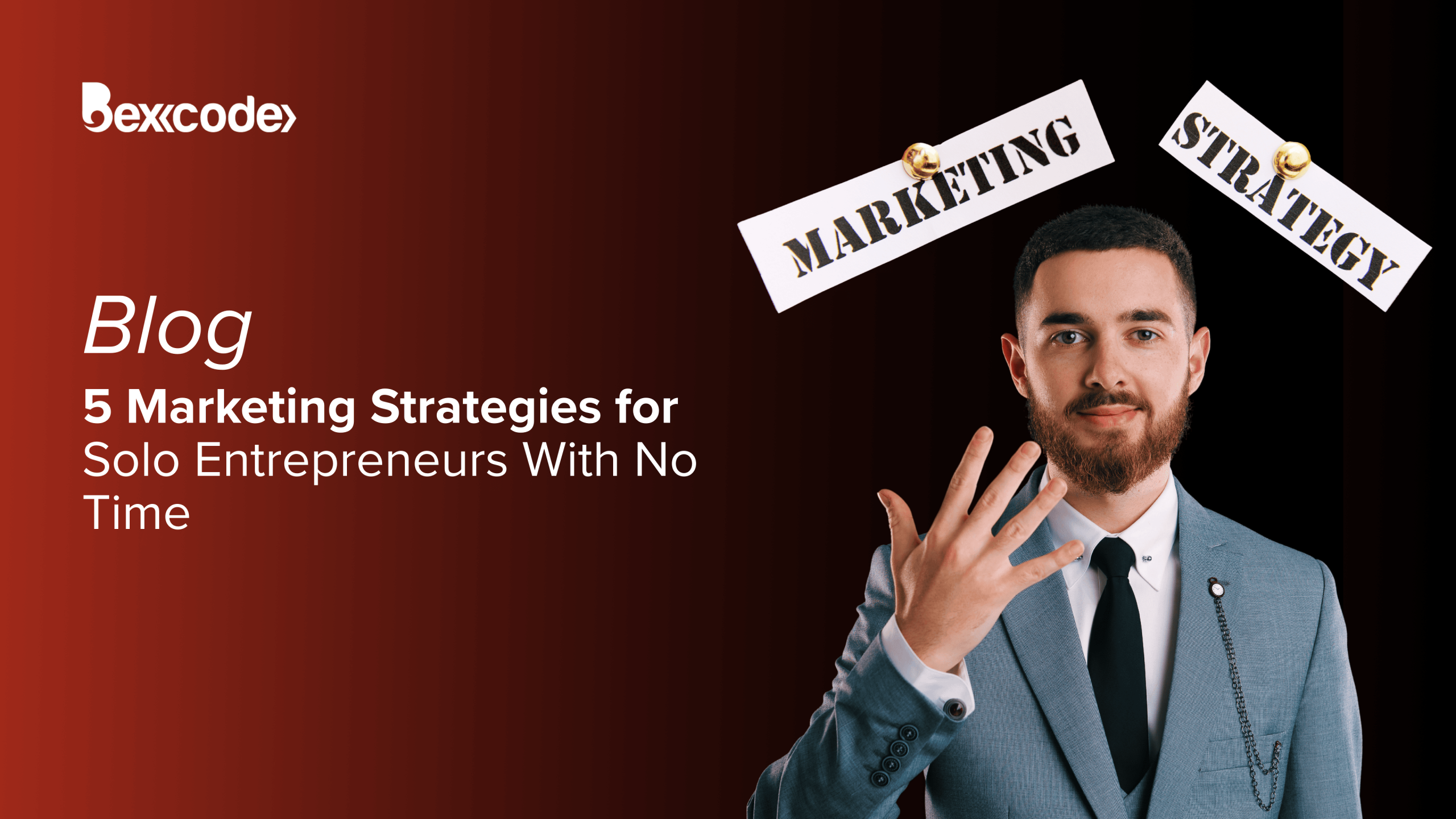
Below are five proven marketing strategies built specifically for solo entrepreneurs who want results without burning out.
Strategy 1: Focus on One Core Channel and Commit to It
One of the biggest mistakes solo founders make is trying to market on too many platforms at once. LinkedIn, Instagram, email, blogs, ads, and networking all sound important, but spreading yourself thin usually leads to inconsistency and frustration.
The smartest move is to choose one primary channel where your audience already spends time and commit to it fully.
If you sell B2B services, LinkedIn is often the strongest choice. If you run a local or visual brand, Instagram or Google Business Profile may work better. If your audience prefers long form insights, email marketing could be the right fit.
This is one of the most effective simple marketing tips you can follow. Depth always beats breadth when time is limited.
According to Harvard Business Review, consistent presence in one well chosen channel builds stronger brand recall and trust than scattered activity across multiple platforms.
Once your core channel is stable, you can expand later.
Strategy 2: Turn One Idea Into Multiple Assets
Solo entrepreneurs often believe marketing requires constant creation. In reality, it requires smart reuse.
One idea can become a blog post, several social posts, an email, and even talking points for client conversations. This approach saves time and keeps your messaging consistent.
For example, if you write a blog answering a common client question, you can break it into short LinkedIn posts, extract key points for an email newsletter, and reuse it in sales calls.
This is one of the best marketing strategies for entrepreneurs who operate alone. You reduce effort while increasing output.
Content reuse is especially powerful for low-budget marketing because it maximizes the return on every hour you invest.
Strategy 3: Build Trust Before You Sell
Solo entrepreneurs often feel pressure to promote aggressively because they need quick wins. While understandable, this approach can backfire.
People buy from individuals they trust. Trust is built through clarity, education, and consistency, not constant selling.
Instead of pushing offers daily, focus on answering real questions your audience has. Share insights from your experience. Talk about mistakes you have seen clients make and how they can avoid them.
This positions you as a credible expert rather than just another service provider.
Among the top marketing strategies today, trust-based marketing consistently outperforms hard selling, especially for service driven businesses.
Strategy 4: Automate Small Things That Drain Time
Time is the most limited resource for solo founders. Any task that often repeats should be automated or simplified.
This could include scheduling social posts in advance, using templates for emails, or setting up basic workflows for lead responses. Even saving thirty minutes a day compounds over time.
Low-budget marketing does not mean manual marketing. Many affordable tools exist that help solo entrepreneurs stay visible without daily effort.
Automation allows you to show up consistently even on busy days, which is critical for marketing momentum.
Strategy 5: Get Support Without Building a Full Team
At some point, doing everything yourself becomes the bottleneck. Many solo entrepreneurs delay getting help because they assume it is expensive or complex.
In reality, support does not have to mean hiring full-time employees. Outsourcing specific marketing tasks such as content scheduling, lead follow-ups, or basic research can free up hours each week.
This is why many founders explore support models as part of marketing for solo entrepreneurs. You stay in control while removing the repetitive workload.
Support enables you to focus on strategy, relationships, and revenue-generating work instead of execution fatigue.
Why Simpler Marketing Works Better for Solo Founders
Marketing does not fail because solo entrepreneurs lack ideas. It fails because systems are missing.
Simple strategies that fit into real schedules are far more sustainable than complex plans that require constant attention.
The most successful solo entrepreneurs focus on clarity, consistency, and leverage. They choose fewer strategies and execute them well.
This mindset shift is what separates steady growth from constant overwhelm.
Final Thoughts
If you are building alone, your marketing approach should respect your time, energy, and limits.
Choose one channel. Reuse your ideas. Build trust. Automate where possible. Get help where it counts.
These are not shortcuts. They are practical systems designed for real entrepreneurs.
Want marketing that works without taking over your entire week?
Schedule a call with our experts at Bexcode and explore smart, realistic marketing strategies built for solo entrepreneurs who value growth and balance.